Tightrope Trivia: The Ultimate Positive Guide to a Thrilling World of Balance
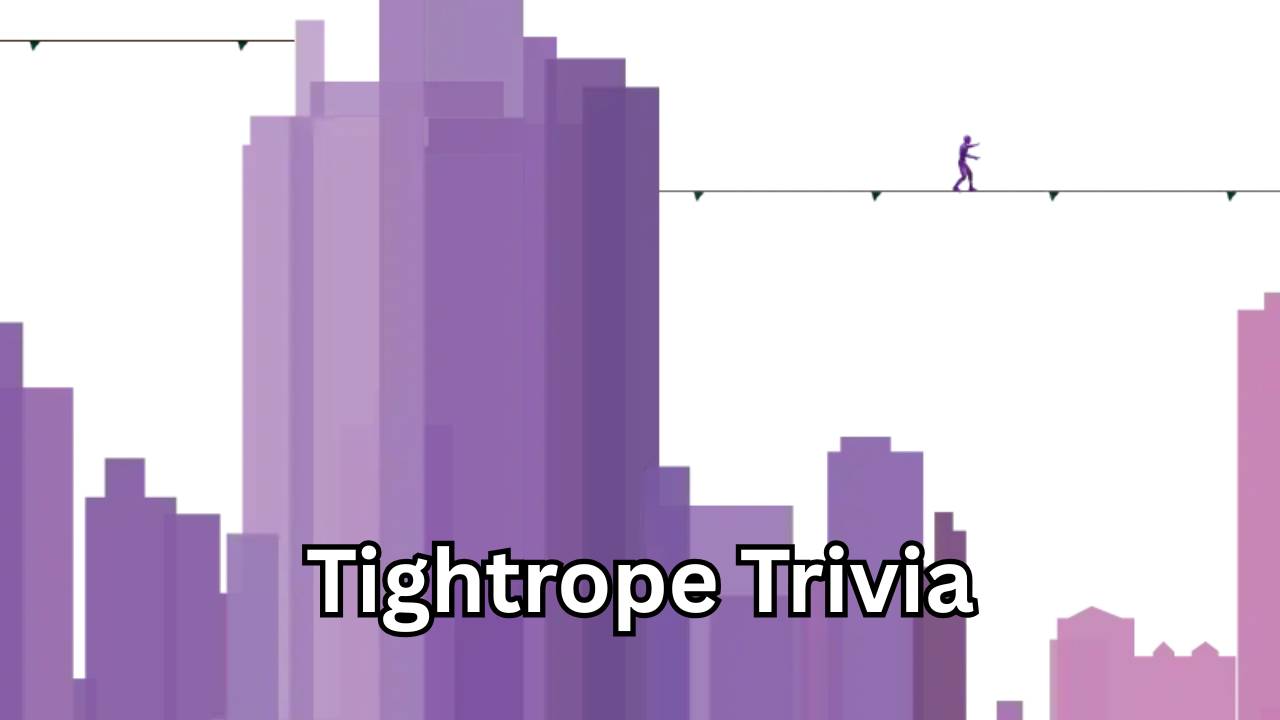
Tightrope trivia opens a fascinating window into one of humanity’s most daring and positive forms of performance, where balance, courage, and precision come together to create unforgettable moments of suspense and beauty. From ancient festivals to modern circuses, the simple act of walking on a rope stretched high above the ground has evolved into a powerful symbol of confidence and artistic expression that continues to amaze audiences worldwide.
The ancient roots of walking on the wire
Long before modern entertainment industries existed, people were already fascinated by the idea of defying gravity through balance. Historical records suggest that rope walking was practised in ancient China, India, and parts of the Middle East, both as a ceremonial act and as public entertainment. Performers would stretch ropes across town squares, temples, or natural landscapes and walk across them to demonstrate skill, bravery, and spiritual discipline.
In ancient China, acrobats were celebrated for their ability to maintain balance on thin cords while carrying objects or performing fluid movements. These early traditions helped shape what we now know as tightrope walking, though the ropes and techniques were far simpler than today’s equipment. Over time, these acts became more sophisticated, integrating music, storytelling, and even humour to keep audiences engaged.
In Europe, medieval festivals often featured rope walkers who entertained crowds in marketplaces. They became symbols of both physical mastery and theatrical charm. Their performances were not only about staying upright but also about captivating spectators with gestures, costumes, and dramatic flair. This blend of athleticism and artistry laid the groundwork for modern high-wire acts.

How the skill developed into a global art form
As travel and cultural exchange increased, rope walking spread to new regions and adapted to different traditions. In some cultures, performers focused on spiritual or ritualistic meanings, while in others, the emphasis was placed on spectacle and entertainment. By the nineteenth century, the art had found a permanent home in travelling circuses and theatres.
Circuses transformed the humble rope into a dramatic stage. They elevated it higher, stretched it farther, and encouraged performers to attempt increasingly daring feats. Walking on a wire hundreds of feet above the ground added a thrilling sense of danger, captivating audiences. The introduction of safety measures, such as balancing poles and later safety nets, allowed artists to push their limits while reducing risk.
This era also gave rise to famous high-wire legends whose names became synonymous with bravery. Their performances were widely reported in newspapers, turning them into celebrities of their time. These pioneers showed the world that balancing on a wire was not just a trick but a legitimate and respected art.
The science behind balance and movement
Walking on a rope is not just about courage; it is deeply rooted in physics and human anatomy. Balance depends on keeping the body’s centre of gravity directly over the wire. Even the most minor shift can cause instability, which is why performers move with deliberate, controlled steps.
The balancing pole often used by high-wire artists is a clever application of physics. By holding a long, weighted pole, performers increase their rotational inertia, making it easier to stay upright. This slows down any unwanted tilting motion and gives the walker more time to correct their posture.
Muscle coordination also plays a vital role. The core muscles stabilise the torso, while the legs and feet continually make micro-adjustments to maintain alignment. The brain continuously processes feedback from the inner ear and the eyes, allowing the performer to react instantly to changes in balance. This remarkable coordination is the result of years of training and practice.
Why are people fascinated by high-wire acts?
There is something deeply human about watching someone confront fear in a controlled environment. When a performer steps onto a narrow wire suspended high in the air, it triggers a natural emotional response in the audience. Viewers feel both tension and admiration, creating a powerful connection to the act.
This fascination is not just about danger. It is also about the beauty of precision and grace. A skilled rope walker moves with calm confidence, making even the most challenging manoeuvres look effortless. That contrast between risk and elegance is what keeps people coming back to watch.
Stories, facts, and tightrope trivia have become popular because they allow fans to explore the background behind these performances. Learning how artists train, what equipment they use, and how they overcome fear adds depth to the spectacle, making it even more impressive.
Tightrope trivia that reveals surprising facts
One of the most interesting things about this discipline is how many unexpected details surround it. For example, many early performers trained on low ropes close to the ground before ever attempting great heights. This allowed them to perfect their technique without the added pressure of altitude.
Another fascinating point is that not all ropes are the same. Modern high wires are often made from steel cables, which provide more stability and durability than traditional hemp ropes. The cable’s surface is carefully designed to provide enough grip without being too rough on the performer’s feet.
The weather also plays a massive role in every performance. Wind, temperature, and humidity can all affect the wire’s tension. Skilled artists learn to read these conditions and adjust their movements accordingly, sometimes postponing a show if the environment becomes too risky.
These kinds of insights make tightrope trivia so engaging because they show how much preparation goes into what might look like a simple walk across a line.

Training routines and mental preparation
Behind every successful high-wire performance is a strict training regimen. Performers spend years building strength, flexibility, and balance. They often begin with exercises that improve coordination, such as yoga, dance, or gymnastics. These activities help develop body awareness, which is crucial for staying steady on a narrow surface.
Mental preparation is just as necessary as physical conditioning. Fear is a natural response to heights, but experienced performers learn how to manage it. Visualisation techniques, controlled breathing, and meditation are commonly used to maintain focus. By calming the mind, the body can respond more effectively to the demands of the world.
Many artists also practice mindfulness, staying fully present with each step they take. This helps prevent distractions that could lead to mistakes. Understanding these behind-the-scenes habits adds another layer of appreciation when watching a live performance.
Modern technology and safety innovations
While high-wire acts will always involve risk, modern technology has made them significantly safer. Advances in materials science have led to stronger, more reliable cables that can support greater weight and withstand harsh conditions. Harnesses and safety lines are often used during rehearsals, allowing performers to experiment with new moves without unnecessary danger.
Some shows also incorporate hidden safety systems that are not visible to the audience. These measures ensure that, if a slip occurs, the performer is protected from serious injury. Even with these precautions, however, the skill required to walk on a wire remains immense.
The blend of traditional artistry and modern engineering has allowed the discipline to reach new heights, both literally and figuratively. It also provides a wealth of tightrope trivia for enthusiasts who enjoy learning how innovation continues to shape this ancient craft.
Cultural influence and symbolic meaning
Beyond entertainment, rope walking has taken on symbolic meaning in many cultures. It is often seen as a metaphor for life’s challenges, where one must maintain balance while moving forward despite uncertainty. This symbolism has appeared in literature, film, and even philosophy.
In some traditions, walking on a wire represents spiritual balance, the harmony between body and mind. In others, it symbolises bravery and the willingness to take risks in pursuit of one’s goals. These deeper meanings help explain why the art has endured for thousands of years.
By exploring these interpretations, fans gain a richer understanding of why the discipline continues to inspire. Tightrope trivia is not just about facts; it is also about the stories and ideas that give those facts meaning.
The role of high-wire acts in today’s entertainment
In the modern world, high-wire performances are featured in circuses, festivals, and even large-scale events. Some artists have taken their skills to iconic locations, stretching cables between skyscrapers or across natural landmarks to create unforgettable spectacles.
Social media has also played a role in spreading the popularity of these feats. Videos of daring walks can go viral, introducing new audiences to the art form. This digital exposure has sparked renewed interest and encouraged a new generation of performers to take up the challenge.
As people search for engaging and inspiring content, tightrope trivia has found a place online, where fans can discover the rich history and fascinating details behind the performances they love.
A timeless art that continues to evolve
From ancient rituals to modern marvels, the journey of rope walking is a story of innovation, courage, and creativity. Each generation of performers builds on the knowledge of those who came before, pushing the boundaries of what is possible while honouring tradition.
The discipline continues to adapt, incorporating new techniques, equipment, and artistic styles. Yet at its core, it remains a simple and powerful expression of balance: a person, a wire, and the determination to cross it.
Exploring tightrope trivia allows us to appreciate not only the thrilling moments we see on stage but also the dedication and history that make them possible. It reminds us that even the most breathtaking feats are rooted in patience, practice, and a deep respect for the craft.
Conclusion
The world of high-wire performance is as rich as it is exciting. It blends ancient traditions with modern innovation, physical skill with mental strength, and danger with elegance. By learning about its origins, techniques, and cultural meaning, we gain a deeper appreciation for every step a performer takes above the ground.
Whether you are a casual viewer or a passionate fan, diving into tightrope trivia offers a rewarding way to connect with this extraordinary art. It reveals the human stories behind the spectacle and shows why walking on a wire will always capture our imagination in a positive, powerful way.
Also Read: Tesla Cybertruck Interior: A Powerful and Surprisingly Positive Redefinition of Truck Design













1 comment